
This is also the first stake sale by a state-run company in 17 months after REC went public in February 2008 to raise over Rs 1,600 crore (Rs 16 billion). The issue will open on August 7 and close on August 11. The company would sell 168 crore (1.68 billion) shares comprising of five per cent stake divestment of the government and infusion of 10 per cent fresh equity.

Divestment in major state-run firms is set to perk up the IPO space, with about six PSUs including Air India, BSNL, Oil India and NHPC, gearing up to sell equity sale in the primary market.
The divestment ministry on Tuesday favoured discounts to retail investors in the forthcoming public issues in six companies beginning with public float of IPCL on February 20.

Management quality and issue price are key concerns for investors; over 60 per cent of the issues this financial year are trading below issue price.
Through anchor allotment, a firm can demonstrate the demand for shares by getting marquee investors on board.

Expect corporate houses to raise funds via IPO in second half of this year.
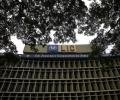
The government will launch the mega public offer of LIC by March and file draft papers with market regulator Sebi by the end of this month, an official said. Finance Minister Nirmala Sitharaman had last week reviewed the progress of the initial public offering (IPO) of Life Insurance Corporation (LIC) in a meeting with top officials of the ministry. The official said the September 2021 quarter financials of LIC are getting finalised as well as fund bifurcation is in progress.
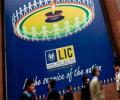
The government has shortlisted Cyril Amarchand Mangaldas for giving legal advice on upcoming mega IPO of India's largest insurance company LIC, an official said. Four law firms - Crawford Bayley, Cyril Amarchand Mangaldas, Link Legal and Shardul Amarchand Mangaldas & Co - had made presentations before the Department of Investment and Public Asset Management (DIPAM) on September 24. Following presentations, Cyril Amarchand Mangaldas has been selected as legal advisor for the initial public offering (IPO) of Life Insurance Corporation (LIC), the official told PTI.
The government has appointed 10 merchant bankers including Goldman Sachs (India) Securities, Citigroup Global Markets India, and Nomura Financial Advisory and Securities India to manage the mega initial public offering of country's largest insurer LIC. Other selected bankers include SBI Capital Market, JM Financial, Axis Capital, BofA Securities, JP Morgan India, ICICI Securities, and Kotak Mahindra Capital Co Ltd, a circular on the divestment department website said. "Government has finalised the book running lead managers and some other advisors for the IPO of LIC," DIPAM Secretary Tuhin Kanta Pandey tweeted. The divestment department had invited applications for the appointment of merchant bankers on July 15.

The government on Monday said it will kickstart its ambitious Rs 30,000 crore (Rs 300 billion) divestment programme with stake sale in RINL this month.

Initial public offerings (IPOs) by start-ups are bringing cheer to investors and investment bankers alike. After food delivery company Zomato, Nykaa has issued the fattest pay cheque to the managers of its share sale -- Rs 148 crore, or 2.8 per cent of its issue proceeds of Rs 5,300 crore. In absolute terms, this is the second-highest amount paid to investment bankers for handling an IPO, while in percentage terms, it is the highest for large IPOs (>$300 million) in the last one year, shows an analysis of the data provided by Prime Database, a primary market tracker.
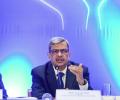
'Had there been no war, maybe, we would come out with a 7.5 per cent stake sale.' 'At this point in time, a 3.5 per cent stake sale looked good.'

'Inter-ministerial coordination, information on the proposed PSUs, and due diligence are taking longer than expected to conclude the process.'

In the first nine months of 2017, investment banks pocketed Rs 500 crore for helping companies raise Rs 30,853 crore through IPOs.
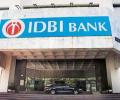
The department of investment and public asset management is racing against time to launch the LIC IPO, which could become the largest-ever listing on the Indian bourses. This would lead to some delay in the strategic divestment of IDBI Bank.
Hectic fundraising through initial public offerings (IPOs) is expected in October-November, with at least 30 companies are looking to collectively raise over Rs 45,000 crore through initial share-sales, merchant banking sources said. Of the total fundraising, a large chunk would be garnered by technology-driven companies. The successful IPO of food delivery company Zomato, which was overwhelmingly subscribed by over 38 times, encouraged new-age tech companies to come out with their primary share-sales.

Indian stock markets are expected to be driven mostly by global factors this week amid a lack of local triggers and earnings season largely coming to an end, say analysts. Crude oil prices, rupee movement and US Federal Reserve meeting minutes to be released this week will also influence the market sentiment. "With the earnings season behind us, global cues would largely dictate the trend in the coming week," Ajit Mishra, SVP - technical research, Religare Broking Ltd, said.
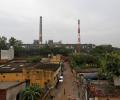
Power generation decelerated 4.7 per cent year-on-year (Y-o-Y) to 155 billion units (BU) in August 2024. This was the first downtrend in many years, albeit on a high base - generation had increased 19 per cent Y-o-Y to 163 billion units (BU) in August 2023. The dip was partly due to excess rainfall, which pared cooling demand and also reduced need for irrigation.

In the past 10 trading sessions, shares of the state-owned company have shot up more than 50 per cent.
Indian Bank plans an initial public offer in July 2004 to raise capital for funding its expansions, its chairman Ranjana Kumar said on Tuesday.
Following the footsteps of its peers, the Kolkata-based UCO Bank has priced its Rs 240 crore initial public offer at an attractive Rs 12 a share to woo retail investors.
LIC's Rs 3,000 crore bid helped HAL reach the minimum 10 per cent dilution threshold required for listing, sources said

'This is not just the IREDA's IPO. It is the success of the ministry of new and renewable energy and of the renewable energy industry.'

The government on Monday rapped state-owned BSNL for poor financial performance and made a case for disinvestment in the telecom PSU through an initial public offer.

The upstream oil and gas (O&G) sector has delivered a stellar performance in the stock market in the recent past. The O&G sector is dominated by PSUs and despite the imposition of a windfall tax, profitability has been impressive. Oil India Limited (OIL) is particularly favoured by investors.

With general elections on the horizon, the government's privatisation bandwagon has almost but stalled as a government wary of being accused of selling family silver opts for minority stake sales on stock exchanges over outright privatisation. The result -- the divestment target for current fiscal year is again likely to be missed. Big ticket privatisation plans such as that of Bharat Petroleum Corporation Ltd (BPCL), Shipping Corporation of India (SCI) and CONCOR are already on the backburner and analysts feel meaningful privatisation can happen only after April/May general elections.

Since the beginning of 2020, i-bankers have collected nearly Rs 1,800 crore by way of IPO fees. Interestingly, the India fees this year form just 1 per cent of the global fee pool of $13.7 billion from IPOs.
The power sector is always strongly correlated to economic activity and is receiving its share of investor attention as India's post-Covid-19 recovery continues. India's leading integrated power producer, the public sector undertaking (PSU) NTPC controls around 25 per cent of India's power capacity. It continues to increase installed capacity, in thermal as well as renewables (solar, wind, green hydrogen) and hydropower and pumped hydro, and also has backward integration into coal mining, and explored nuclear.

Out of 11 companies that got listed in 2019, nine have outrun the market by gaining more than 10 per cent against their respective issue price.
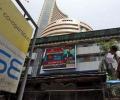
As many as 267 of 453 companies from the BSE500 index are trading above their consensus price targets, according to the data compiled by Bloomberg. Not all companies in the BSE500 index are tracked by analysts.

It was touted as a game changer but big-ticket privatisation has been a mixed bag as the government faces unanticipated challenges of lukewarm investor response, employee union agitation and legal hurdles. Prime Minister Narendra Modi's often-repeated statement 'the government has no business to be in business' guided the drawing up of an ambitious privatisation pipeline. While Air India sale succeeded, Bharat Petroleum Corporation Ltd (BPCL) divestment failed.
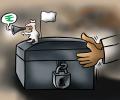
While divestment through IPOs saw an over 90 per cent drop as compared to the previous financial year, the exchange traded fund (ETF) route proved to be a shot in the arm for the government, reports Sundar Sethuraman.
The target of mopping up Rs 1.75 lakh crore from divestments of some of the public sector companies, including LIC and BPCL during the current fiscal, is on track and groundwork is being prepared for the goal, Chief Economic Advisor Krishnamurthy Subramanian said on Monday. On the COVID-19 pandemic, Subramanian said the impact of the second wave is lesser than that of the first one. In an interactive session, organised by Federation of Telangana Chambers of Commerce and Industry, the CEA said robust GST collections, over Rs one lakh crore per month for eight months in a row shows that consumption is picking up indicating positive signal for growth.

'It really doesn't matter that investors getting allotments sell their IPO stock holdings on listing day because a new set of investors are entering.' 'This explains the continued rise in stock prices even after the first day of listing.'
Public sector undertakings Bharat Earth Movers (BEML), Rural Electrification Corporation (REC), Power Grid Corporation of India and National Hydroelectric Power Corporation (NHPC), are slated to hit the market with their IPOs.

Among top losers, Reliance Industries (RIL) sank over 4 per cent, after the company shelved a proposed deal to sell a 20 per cent stake in its oil refinery and petrochemical business to Saudi Aramco for $15 billion. Other laggards included Bajaj Finance, Bajaj Finserv, NTPC, SBI and Titan.

SAIL is awaiting the steel ministry's approval for its proposed public issue to raise funds to part finance its Rs 70,000-crore expansion project.

The IPO is an offer for sale of 38 million shares by SBI, BOB, LIC, PNB and T Rowe Price. Barring T Rowe and PNB, the others are selling stake to comply with Sebi norms.
 © 2026 Rediff.com - Advertise with us - Disclaimer - Privacy Policy - Sitemap - Feedback - About us - Terms of use - Grievances